 Co-produced by :Game Period & Alvin Foo
Sunday, April 2, 2017


Friday, March 11, 2016

Thursday, January 9, 2014
$10bn spent on Apple App Store in 2013

Over $1bn worth of sales in December alone to make it the most successful month EVER!
Fresh from its announcement that Beyonce's album was the fastest-selling to ever hit iTunes, Apple has revealed its devout customers spent over $10 billion on the App Store in 2013.
Sales passed $1 billion in December alone as users downloaded more than three billion apps to make it the most successful month in the history of the App Store. The phenomenal figures mean developers have now earned $15 billion on the iOS marketplace.
Tuesday, August 27, 2013
Apple's Appstore revamping its app ranking criteria

With more apps going into Apple's AppStore, it’s getting increasingly important to rank apps properly, highlighting the titles that are better than the others. Apple knows this and is working to improve ranking algorithms as we speak.
According to app-marketing firm Fiksu, the Cupertino-based company has been revamping the criteria it uses to rank digital products. They have apparently discovered two very important changes to the ranking algorithm: Rankings now take into account user ratings, and a change in how often the App Store updates the top-seller lists.
The first tweak is arguably more important as it will push apps and games with better reviews up to the top. On the other hand, if an app under-delivers (compared to what’s promised in the app description), users will take notice, give it a low rating and make it slide down the rankings.
The second change alters how often the App Store updates its rankings from every 15 minutes to every three hours. In other words, if an app scores a bunch of downloads in 15 minutes, it won’t fly up the top quickly. Rather, the algorithm will take notice and keep following the number of downloads for up to 3 hours before doing anything about it. It is believed that these two changes alone will help recommend better apps and games to the end users.
Monday, August 5, 2013
Complimentary FREE trial for 6 months on Sage One
Sage One small business invoicing, accounting and project management. Sage One was launched in the United States in the spring of 2012. Since then it has seen several enhancements. Among the added enhancements is the ability to accept mobile payments and electronic payments on invoices, as we reported in February.
The company also added bank integration this year. Customers can now download transactions from over 10,000 banks in the United States and import them into the Sage One online system (avoiding manual keying of data for each banking transaction).
Here are the instructions of how to register for complimentary access :
1. Sign up for a free trial at https://mysageone.na.sageone.
2. Once your account is activated, go into Sage One, under "Settings", "Subscriptions", enter the promo code, WELOVEBLOGGERS
3. Your account will be updated to a from a 15-day trial to free 6-month account.
Monday, June 24, 2013

Friday, June 21, 2013
The drop test : iPhone 5 vs Samsung Galaxy S4
Protect Your Bubble, a gadget insurance company has carried out a series of drop tests on the iPhone 5 and the Samsung Galaxy S4 in an attempt to figure out which phone is more durable. Which one you reckon will survive the fall from various heights? Check out the video below for the outcome.
Tuesday, June 11, 2013
iOS 7 - Biggest Revamp done by Apple so far

The new iOS 7 update gives the mobile operating system a radical new look and some first-for-Apple features for iPhone and iPad fans, like quick-access system controls, automatic app updates, and Apple's AirDrop file-sharing system.
The visual overhaul is a clean sweep that changes absolutely everything, from the typography and color schemes to the typical icon and button shape across the entire platform.
Below are some of the notable features added :
- Control Centre is among the 'hundreds of new features,' providing users with access to Airplane Mode, wi-fi, Bluetooth, screen brightness and more. It's accessible with one upwards swipe from the bottom of the screen.

- Notification Centre is available from the lock screen to offer users an overview of their alerts. The new Today feature offers a summary of events for the day ahead, such as meetings and so on.

- Multitasking is also reportedly improved, with developers able to integrate functionality that offers their creations the ability to run in the background.


Camera app features filters inspired by Instagram. Users will be able to make real-time photo effects and switch between four camera options with a swipe.

Photos app features Moments, a function that organises media based on time and location. It comes with iCloud sharing which allows family and friends to share and connect their collections in one place.

Safari redesign supports full-screen browsing, while iCloud Keychain stores all passwords and credit card details securely across all devices. Parental Controls are enhanced to block access to adult material and other sites.

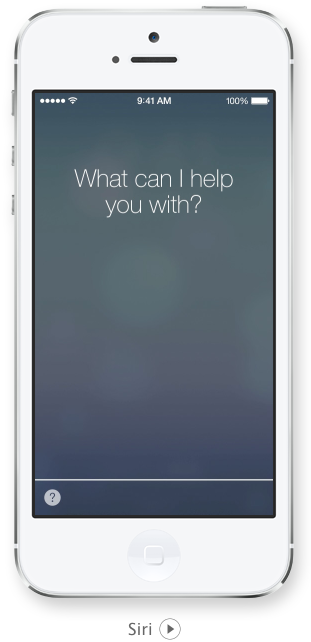
Siri has new male and female voices and Twitter search integration, so users can ask what people are saying on the social network. Wikipedia and Bing are also integrated. Integration with Bing is definitely a smack in Google's face.
Music app comes with iTunes Radio internet steaming service, which features over 200 stations. Available across iPhone, iPad, iPod Touch, Mac, PC and Apple TV.

- App Store now comes with more than 900,000 apps and features a new Kids category.
For the WWDC keynote video, you can check out the video below :
You can also check out the official iOS 7 promo video below :
Feel free to comment and tell me whether the new features are game changing. Has Apple done enough to stay ahead of the game or they are going to play catch up to Android?
Subscribe to:
Posts (Atom)